CapStash
// VAULT 1337 ARCHIVE — RECORD EL32A —
CAP
STASH
Currency of the Wasteland
90B Max Supply
60s Block Time
512 Bit Whirlpool
LIVE Network Status
VAULT-1337 // ORIGINS.LOG
SYS:~$ cat origins.log

The Origin Story

CapStash was not built to admire the old world. It was built to survive after the old world proved it could not survive itself.

The Dead Chain

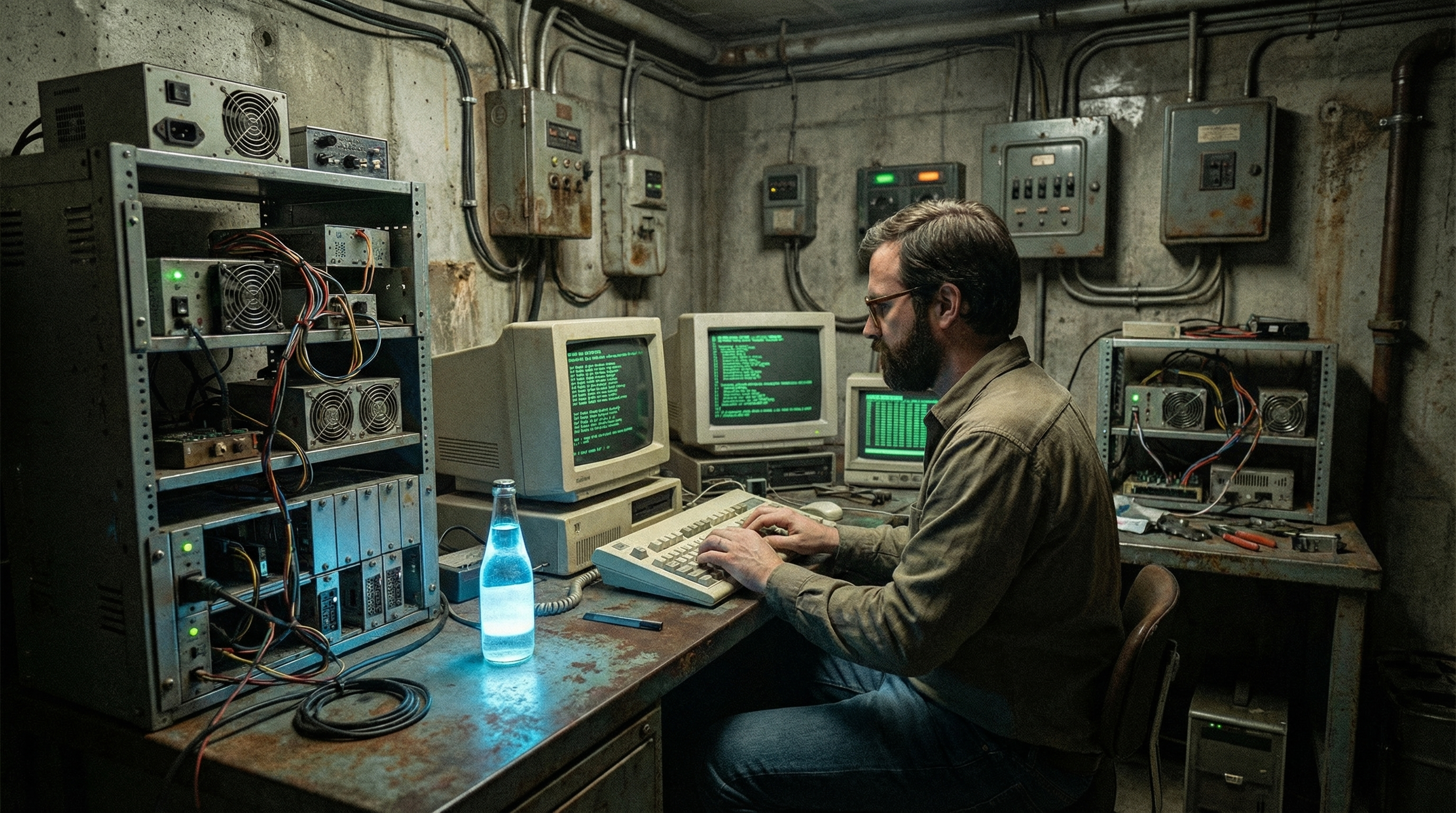
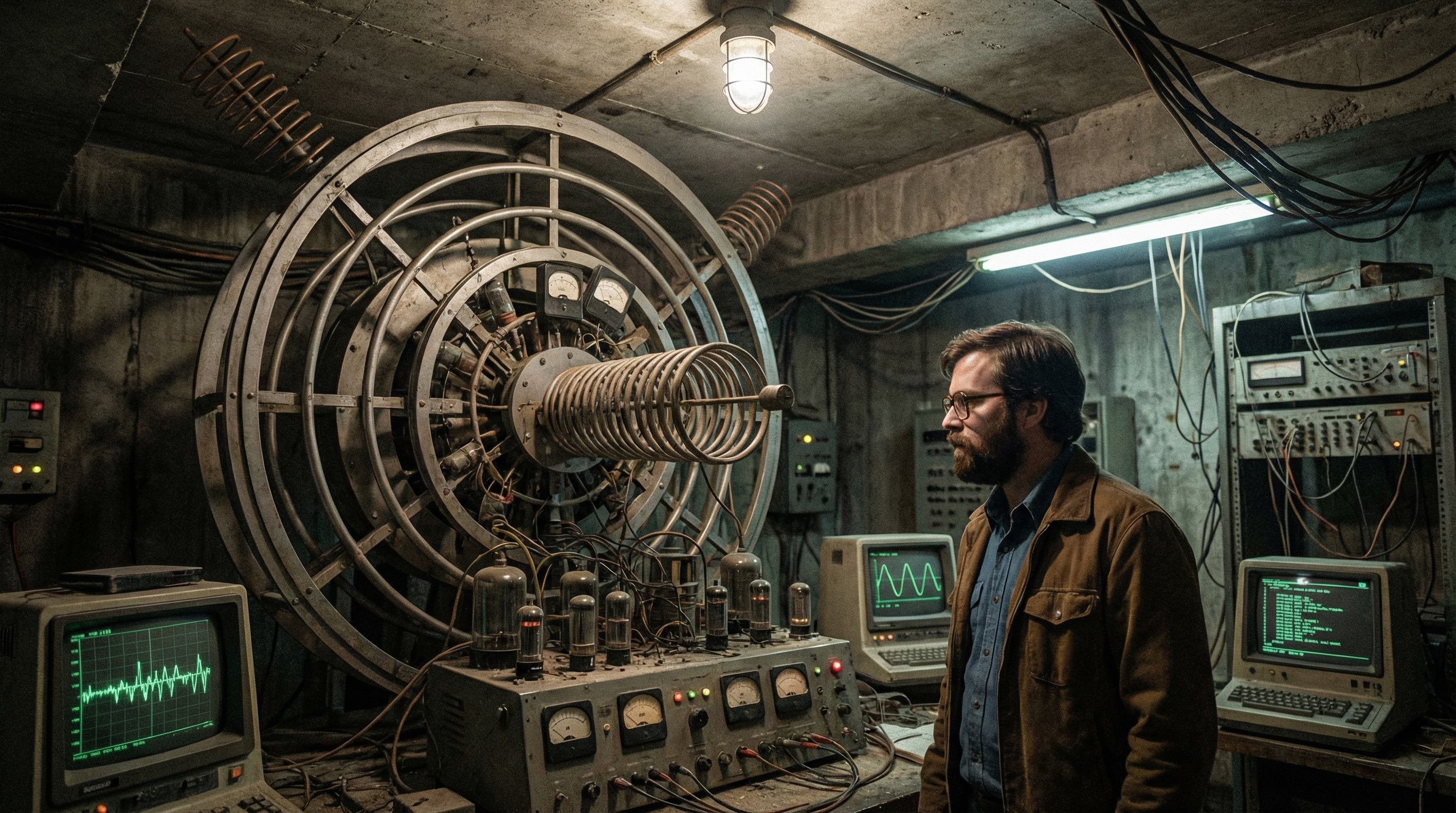
In 2283, buried in the cracked concrete guts of Vault 1337, Elijah found a machine that should have been dead. Not broken. Dead. Rust-bitten casing. Cooling fans choked with two centuries of dust. Board traces like graveyard veins under a flashlight.

But somewhere inside that corpse, a signal still lived. He bridged what he could bridge, fed it scavenged power, and watched an ancient Bitcoin node crawl back awake like something too stubborn to stay buried.

What came back was not hope. It was a warning. Bitcoin had not been murdered. It had not been hacked apart or burned out in the fire. It had simply run out of world.

Its chain had been built for giant power grids, humming datacenters, easy silicon, global markets, and the arrogant belief that industrial civilization was permanent. When that world tore itself open, the chain slowed into a crawl, then silence, then history.

Elijah understood the lesson better than any economist ever had: money built for a permanent world dies when the world stops being permanent.

1 Lesson

Money that depends on permanence dies when permanence does.
CapStash begins the moment Elijah stops mourning the dead chain and starts dragging its soul through the Wasteland.
Not to replace Bitcoin's soul. To force it to survive.

Elijah of Vault 1337

A lone Network Systems Technician, a dead Bitcoin node, and the realization that money built for empires dies when the empires do.

// PERSONNEL FILE — CLASSIFIED
Elijah of Vault 1337
Designation
Network Systems Technician
Known Name
Elijah
Surname
████████████
Vault Assignment
Vault 1337 — Systems Division
Known Discovery
Dead Bitcoin Node // 2283
Noted Build Site
Vault 1337 Maintenance Dark
Wasteland Name
The Mysterious Stranger
Status
Unconfirmed

CapStash began in the maintenance dark of Vault 1337, under bad lights and worse air, with Elijah hunched over salvaged terminals and old codebases that smelled like dust, copper, and heat.

He kept the proof-of-work heart. Kept the old conviction that money had to be earned, not issued by decree. But he stripped away the fatal assumptions. CapStash would not be built for ministries, stock exchanges, or a civilization drunk on its own permanence. It would be built for settlements clinging to life on busted generators, trade routes that opened and closed with the season, and scattered miners in machine shops and relay shacks.

The Wasteland Rule

Elijah knew a chain built for the Wasteland could not be ruled by mechanical certainty alone. Out here, survival ran on labor, salvage, grit, and long odds. Sometimes the strongest hand still lost. Sometimes some half-dead scavver with a patched rig and one good night of power hit the miracle nobody saw coming.

So he left room for that truth inside CapStash. Most blocks would still be earned the hard way — proof of work, heat, hardware, time, persistence. Dark Gravity Wave would keep the chain breathing with the real pulse of economic life, tightening when the world went lean and moving fast when trade came roaring back.

And buried in consensus, Elijah wrote one more law: sometimes history turns on chance. That became the Lottery Block — not a bailout, not a panic switch, not a surrender of proof of work, but a lawful anomaly written into the bones of the chain.

The Loop

Elijah did not just build a new chain. He found the corpse of one monetary world, built the bones of another in the dark, and prepared to reach backward through stolen old-world machinery to plant that second world where the first one could not kill it.

By the time the Wasteland began whispering about a wandering terminal-checking stranger, CapStash was already more than a design. It was a signal moving toward history.

The Deeper Discovery

The more Elijah dug through sealed vault records, scorched university mirrors, military fragments, and pre-War financial archives, the less he believed the old world had simply blundered into ruin.

The Teller Array - M.I.T. Black Project Clearance Omega

No. Stupidity was part of it. Greed too. But underneath all of it was intent. Pressure. Design. The numbers, the policy swings, the debt spirals, the supply shocks, the timing — all of it felt too exact, too useful to the wrong people.

The Teller Array

Again and again, the scraps pointed to one place: M.I.T. What Elijah found there was not a legend or some clean white laboratory miracle. It was wreckage — a buried black-project carcass sealed under rock, ash, and generations of lies.

Hardware with half its guts blown out. Storage arrays corrupted almost beyond recovery. Lab notes chewed apart by time. But enough remained to understand the sin.

The old world had found a way to throw information backward.

Signals. Numbers. Instructions. Enough to place a thumb on the scale of history before history knew the scale was there. Enough to skew forecasts, nudge markets, front-run policy, corner debt, and bend monetary decisions years before the people living through them could even guess they'd been played.

Once Elijah understood that, the old world finally made sense. They did not just print money. They rigged the conditions that made the printing inevitable. They did not just react to collapse. They cultivated it. The Great War was not just the explosion. It was the bill coming due.

// Vault 1337 Personal Log

"If they used time to poison money, I'd use time to save it."

The Package Sent Backward

So Elijah built the package: the CapStash software, the chain rules, the parameters, and the data required to bring the Genesis Block into existence — compressed into something broken old-world hardware might still punch backward through the dark.

The Target

Not a government server. Not a famous lab. Not a corporate bunker. One ordinary machine in the old world — an ancestor's forgotten laptop, old enough to be ignored, alive enough to still be listening.

The Catch

Elijah threw the code into the past. The past caught it. Before the bombs. Before the ash. Before the dead Bitcoin node in Vault 1337 ever coughed its warning to life.

The Loop

CapStash did not begin out of nowhere in 2287. Elijah completed a loop — building one monetary world in the dark, then planting it backward through history where the first one could not kill it.

Proof of Work

Most blocks are still earned the hard way: labor, heat, hardware, time, and persistence. The chain keeps the earned-money heart intact.

Dark Gravity Wave

Difficulty tracks the pulse of real economic life. When the Wasteland moves fast, the chain moves fast. When the world goes lean, difficulty bends instead of strangling the network.

Lottery Block

A lawful anomaly written into consensus from the beginning. Not a bailout. Not surrender. A reminder that in the Wasteland, order matters — but timing and improbable survival matter too.

Built to Bend, Not Break

Bitcoin waited too long to admit the world had changed. CapStash was designed from the start for broken rhythms, interrupted infrastructure, and economies that surge, collapse, and surge again.

Vault 1337 Mining Operation

Design Philosophy

The Problem: the first sound money was built like a machine that expected the world to stay orderly forever.

The Solution: CapStash was built for settlements on busted generators, machine shops, relay shacks, and markets that breathe like half-healed wounds.

When the Wasteland is alive — when rigs are running, barter is flowing, and trade is breathing — the chain holds its 60-second rhythm. When the world goes lean again, difficulty can fall fast enough to match reality instead of trapping the network under dead assumptions, settling back into it's defined 60-second average block time rhythm

// Design Principle
// Keep the earned-money heart. Kill the fatal assumptions.

ELIJAH@VAULT-1337:~$ ./capstash-design --Wasteland-mode

Assumptions removed: Permanent Civilization / Guaranteed Infrastructure / Infinite Industrial Continuity
Consensus retained: Proof of Work / Scarcity / Settlement Finality / Labor-backed Issuance
Adaptive rule set: Dark Gravity Wave + Lottery Block + WPXF

Result: chain bends with reality instead of snapping under it.

// The Wasteland does not reward fantasy.
// Build for what survives.

Wire by Wire.
Settlement by Settlement.

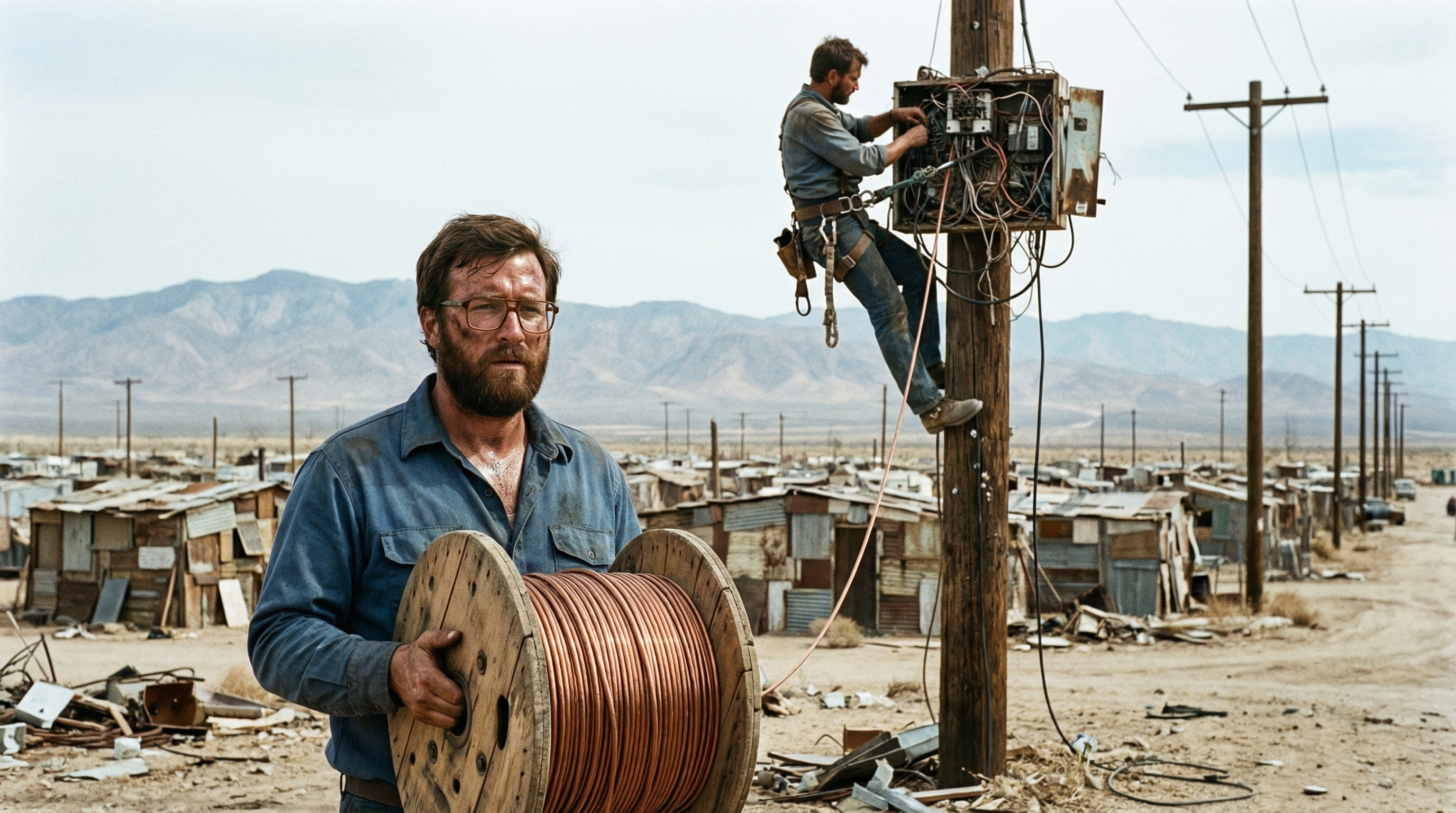
A buried chain is still a buried chain unless people can reach each other. So Elijah started stringing wire.

Copperline Infrastructure — Post-to-Post

How Money Spread

The Wasteland was full of isolated pockets of life — settlements, vault remnants, scavenger depots, machine bays, little islands of stubborn humanity surrounded by dead miles. No satellites worth trusting. No intact old-world grid. Too much noise. Too much ruin.

So Elijah started stringing wire. Pole to pole. Relay to relay. Settlement to settlement. Thus began the Copperline.

Not some miracle. Not some polished pre-War dream. Just hardline communication dragged through the dirt by people too mean to die quietly. Copperline re-taught the Wasteland how to speak. And CapStash rode those lines like blood through reopened veins.

One carried signal. The other carried value. One let the Wasteland talk. The other let it remember.

1 Chain to Carry
1 Line to Spread It
Wasteland Routes
LIVE Memory in Motion
2283
The Dead Node Wakes

Elijah revives an ancient Bitcoin node in Vault 1337 and discovers the real cause of its death: a chain built for a world that no longer exists.

2283 → 2287
CapStash Takes Shape

In the maintenance dark of the vault, Elijah designs a chain for broken rhythms: proof of work, Dark Gravity Wave, and the Lottery Block written into consensus.

Late 2287: Loop Completed
02/27/2026 → The Package Lands in the Past

After months of repair, Elijah brings the abomination that helped destroy the Old World back online for one final transmission. Using the Teller Array, he sends the software and genesis data backward through time. CapStash enters history early, before the future can bury it. As Elijah leaves the crumbling remnants of the M.I.T annex, he detonates a Mini Nuke, destroying the Teller Array and sealing it in a concrete tomb forever.

2287 → Onward
Copperline Spreads

Elijah leaves Vault 1337 for the last time and begins traveling the Wasteland, building the Copperline. Wire runs outward, settlement by settlement. The Copperline carries news, prices, warnings, barter, rumor, and proof. CapStash rides with it. To some, he's known as Elijah. To others he's known simply as "The Mysterious Stranger".

Today → Tomorrow → Forever
Smuggled Through History

CapStash can be mined because it adapted to the economy of a broken world, slipped through the fingers of the old one, and lived where Bitcoin fossilized.

The Living Network

Settlement Mining Node

Mining Settlements

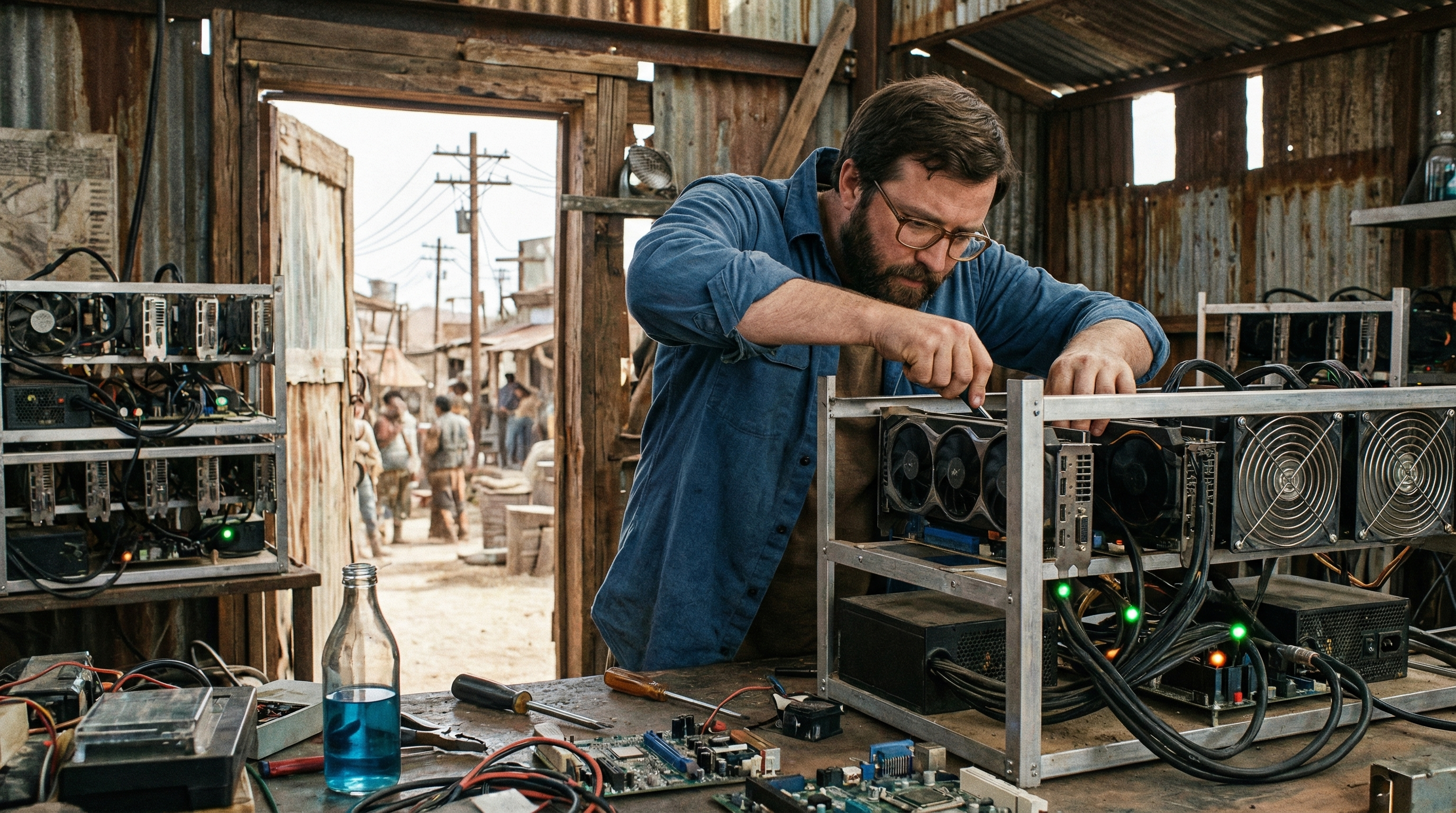
Across the Wasteland, settlements run hardened CapStash nodes. Each node contains the full blockchain. Each is sovereign. No central authority. No single point of failure.

When the Copperline carries signal, money flows. The network was built for rough conditions, bad links, and infrastructure that fails at the worst possible moment — not for tidy old-world assumptions about perfect uptime.

Terminal operators with just enough skill to run a miner. Salvaged hardware. Hand-crimped Copperline cables. The infrastructure of survival is also the infrastructure of money.

Chain Spec

Designed for civilizations that don't exist yet — and for the one that's being rebuilt right now.

90B Maximum Supply
1 CAP Block Reward
60s Target Block Time
512b WPXF PoW
# CapStash Chain — Full Specification

> Software Name: CapStash
> Coin Name: Cap
> Ticker: $CAP
> Block ID Hash: SHA256d (transaction hashing, merkle root, block identification)
> Proof-of-Work: Whirlpool XOR Folded (WPXF)
> Block Time: 60 seconds
> Block Reward: 1 CAP
> Est. Annual Production: < 1 Million CAPS/year
> Maximum Supply: 90,000,000,000 CAPS
> Transaction Model: UTXO (Unspent Transaction Output)
> Mining: CPU-friendly, built-in miner, no external tools required
> ASIC Resistance: Yes — SHA256d ASICs target block IDs only; WPXF remains CPU-competitive
> Lottery Block: Consensus lottery block mechanic active under chain-defined conditions
> Explorer: Built-in, no external hosting required
> Origin Block: 08/14/2287 — Prepped in Vault 1337 Server Room. Broadcast via Teller Array to 02/27/2026 to be Mined & Timestamped
> Genesis Miner: Unknown. Vault 1337 designation: Network Systems Technician.

Chain status: LIVE ■

The Chain
Will Always
Advance.

Bitcoin assumed the world would keep running. CapStash assumes nothing — except that someone, somewhere, will still want to mine the next block.

Join the network. Run a node. Mine CAP. Carry the chain forward.